


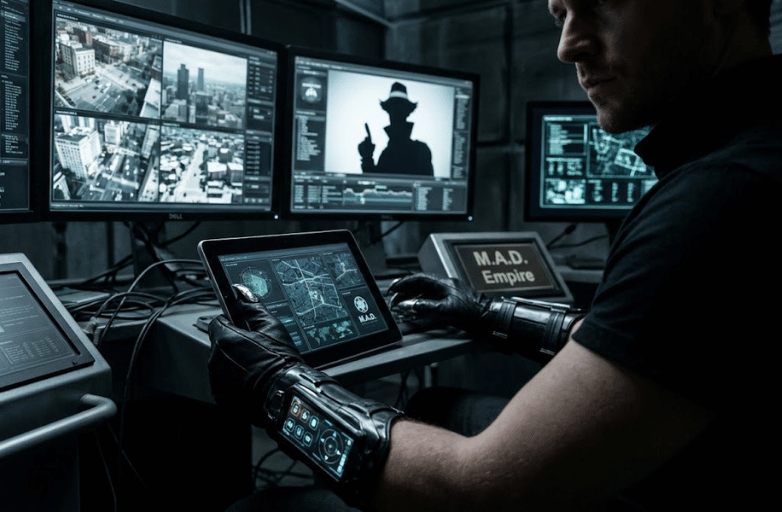
Dr Claw is the shadowy criminal mastermind who repeatedly battles Inspector Gadget. He leads M.A.D. and usually commands its schemes from a concealed headquarters. His hidden face, mechanical-looking glove, deep voice, and furious exits made him one of the cartoon’s defining villains.
The character works because audiences rarely see more than his arm, chair, and nearby cat. That visual restraint lets viewers imagine what the villain looks like. Decades later, his face remains one of the franchise’s most discussed mysteries.
Direct answer: Dr Claw is Inspector Gadget’s main enemy and the leader of M.A.D. The original animated series deliberately keeps his face hidden. Frank Welker supplied his memorable English voice in the classic show, while later games, toys, and adaptations offered different interpretations of the mysterious villain.
Dr. Claw at a Glance
| Fact | Detail |
|---|---|
| Franchise | Inspector Gadget |
| Role | Main recurring villain |
| Organization | M.A.D. |
| Main enemy | Inspector Gadget |
| Classic voice | Frank Welker |
| Signature visual | Metal-style glove and concealed face |
| Companion | M.A.D. Cat |
| Original series debut era | 1983 |
| Main goal | Defeat Gadget while carrying out criminal schemes |
Apple describes the classic show as a 1983 animated series in which Gadget fights M.A.D. and its evil leader. Paramount’s episode guide also documents repeated schemes involving missiles, thefts, kidnappings, and attacks on Gadget. Those plots established the villain as a constant threat rather than a one-story opponent.
Key Takeaways
- Dr. Claw is the recurring mastermind behind M.A.D.
- His face stays hidden throughout the classic cartoon.
- Frank Welker voiced the character in the original English series.
- M.A.D. Cat is his familiar animal companion.
- Later toys and games featured different face designs.
- His mystery remains a major reason viewers remember him.
Who Is Dr. Claw in Inspector Gadget?
Dr. Claw is the criminal leader who sends agents to carry out elaborate plans worldwide. Inspector Gadget receives assignments meant to stop those operations. Penny and Brain often do much of the real detective work behind the scenes.
His crimes vary wildly because the series uses a broad adventure-comedy formula. Paramount lists stories involving stolen missiles, jewels, satellites, gold, kidnapped billionaires, and other M.A.D. plots. The villain’s constant presence ties those otherwise independent adventures together.
Readers who enjoy memorable screen personalities can also explore Newssnaut’s funny movie characters guide. That feature examines why distinctive voices and personality traits keep fictional characters recognizable. The same principle helps explain Claw’s staying power.
Why Dr Claw Never Shows His Face
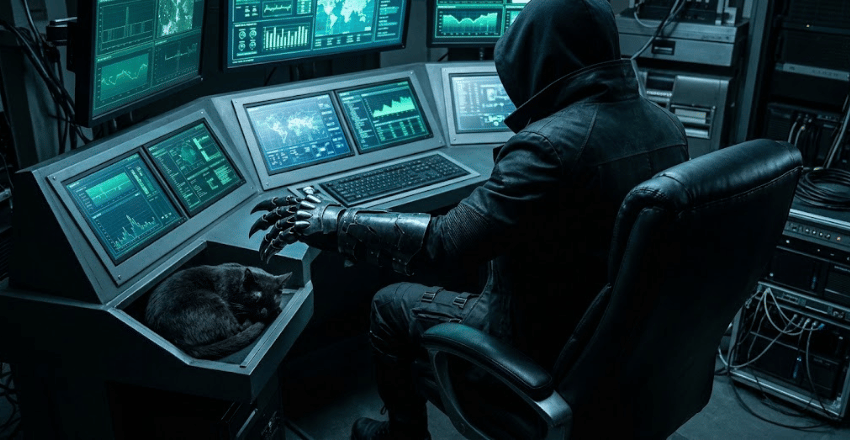
The classic series usually frames the villain so viewers see his arm, chair, computer equipment, or M.A.D. Cat. His face stays outside the normal camera view. That decision turns a simple visual limitation into an ongoing character trait.
Keeping him unseen also makes him feel larger than a typical cartoon criminal. Viewers recognize the glove and voice before needing a facial expression. The series can therefore signal danger with only a few familiar details.
This technique also created a question that lasted beyond the original run. Fans still debate whether any later face design counts as definitive. Recent nostalgia discussions show that the mystery itself remains part of the character’s appeal.
Was Dr. Claw’s Face Ever Revealed?
The answer depends on what counts as an official reveal. The classic television series never established a conventional full-face appearance for viewers. Later merchandise and games did show interpretations of what he might look like.
An Inspector Gadget video game for the Super Nintendo displayed one such face design. VGFacts notes that its spiky gray-haired appearance resembled an earlier action-figure interpretation. The same source also documents a different concept associated with character designer Bruno Bianchi.
These conflicting designs explain why the question never received a single answer. A face on merchandise doesn’t erase the cartoon’s deliberate visual mystery. For many longtime viewers, the unseen version remains the most recognizable one.
Who Voiced Dr. Claw?
Frank Welker voiced the villain in the original English-language cartoon. IMDb credits Welker with voicing Dr. Claw in episodes of the classic series. His low, threatening delivery became central to the character’s identity.
Welker also performed other voices connected with the program. That versatility helped him build a long career across animated television and film. In Claw’s case, the performance mattered even more because viewers rarely saw his face.
The voice had to communicate anger, control, and comic frustration without facial animation. That combination made his threats easy to recognize. His vocal performance became as important as the famous glove.
What Is M.A.D.?
M.A.D. is the criminal organization behind many threats in the franchise. The show repeatedly identifies its operatives as M.A.D. agents working against Gadget and his allies. Dr. Claw sits at the center of those plans.
The organization gives the series an easy structure for weekly adventures. A new agent, invention, or target can appear without changing the main rivalry. Gadget still confronts a larger network controlled by the same unseen boss.
The 2015 revival continued that idea rather than replacing it. ITV describes the newer show as Claw reactivating his global crime syndicate. That continuity shows how strongly M.A.D. became tied to his identity.
M.A.D. Cat and the Villain’s Lair
M.A.D. Cat is the pet usually seen beside the villain. The animal softens the visual scene while also making Claw’s headquarters more recognizable. Their pairing became another repeated image associated with the franchise.
The cat also adds movement to scenes while Claw remains mostly seated and concealed. The animal’s reactions can add comedy to a threatening monologue. Later Inspector Gadget productions continued using M.A.D. Cat alongside the villain.
That pairing fits the show’s mixture of spy parody, adventure, and broad comedy. Newssnaut’s Halloween nostalgia feature explores a similar power of childhood imagery. Familiar visual details can remain memorable long after viewers forget individual plots.
Why Inspector Gadget and Dr. Claw Work as Rivals
Their rivalry succeeds because the two characters operate in completely different ways. Claw plans elaborate crimes from a controlled command center. Gadget stumbles through missions while remaining strangely confident.
The comedy grows from Gadget’s frequent misunderstandings. Penny and Brain regularly help stop threats without him recognizing their full contribution. Claw therefore loses to an opponent who may not understand how he won.
That repeated frustration gives the villain a comic function alongside his threatening role. He can create genuine stakes and still end an episode furious about another failed plan. It is a useful formula for a family cartoon.
How the Character Changed in Later Versions
The franchise eventually moved beyond the original 1980s television run. A 2015 animated series brought Gadget, Penny, Brain, M.A.D., and Claw back for another generation. ITV describes its premise as a modern return of the classic conflict.
The revival introduced Talon, Claw’s nephew, as an active field character. Apple episode descriptions show Talon carrying out missions while Claw directs operations. That change gives the villain a recurring relative who can interact directly with the heroes.
Other Inspector Gadget productions have also altered how much of the villain viewers can see. These changes show that his exact presentation can vary by adaptation. The hidden original version remains the baseline most viewers recognize.
Why the Character Still Stands Out
Many cartoon villains depend on dramatic costumes or constantly visible expressions. Claw depends on absence instead. Viewers remember the parts the show refuses to reveal.
That choice also made him easy to imitate and parody. A gloved hand, a dark chair, and a threatening voice can immediately suggest the character. Few details are needed for the reference to work.
Recent online nostalgia still centers on the missing face and familiar voice. That interest suggests the mystery aged better than a straightforward reveal might have. Readers can find more television and pop-culture coverage through Newssnaut’s Entertainment section.
Frequently Asked Questions
Who is Dr Claw in Inspector Gadget?
He is Inspector Gadget’s recurring archvillain and the leader of M.A.D. He directs criminal schemes while usually remaining inside a hidden command center. The rivalry drives much of the original cartoon’s episodic conflict.
Do viewers ever see Dr. Claw’s face?
The classic animated series keeps his face concealed. Later toys and video games introduced possible designs, but those interpretations have not erased the original mystery. Different franchise materials have also presented different appearances.
Who voiced the original character?
Frank Welker voiced him in the classic English-language series. IMDb credits Welker as the character in original episodes. His deep delivery became one of the villain’s most recognizable features.
Is M.A.D. Cat really his pet?
Yes, M.A.D. Cat regularly appears beside the villain. Later installments continue showing the animal as part of his headquarters and schemes. The pairing is one of the franchise’s familiar recurring images.
Is he related to Inspector Gadget?
The original series treats them as enemies, not relatives. Fan theories have proposed hidden connections, but those theories aren’t the show’s stated premise. The established relationship is villain versus crime-fighting inspector.
The Mystery Was the Smartest Part
Dr. Claw became memorable without needing a conventional character reveal. His voice, glove, organization, cat, and repeated failures gave audiences everything needed to recognize him. Keeping one major detail hidden made the character more interesting.
Later adaptations and merchandise could experiment with his appearance without changing that legacy. The unanswered question became part of the entertainment rather than a missing piece. That is why discussions about his face continue decades after the original show aired.
For more character profiles, television nostalgia, and entertainment explainers, browse Newssnaut’s entertainment coverage. Rewatching an early Inspector Gadget episode also shows how little screen time the villain needs. A hand, a voice, and another scheme are usually enough.
