


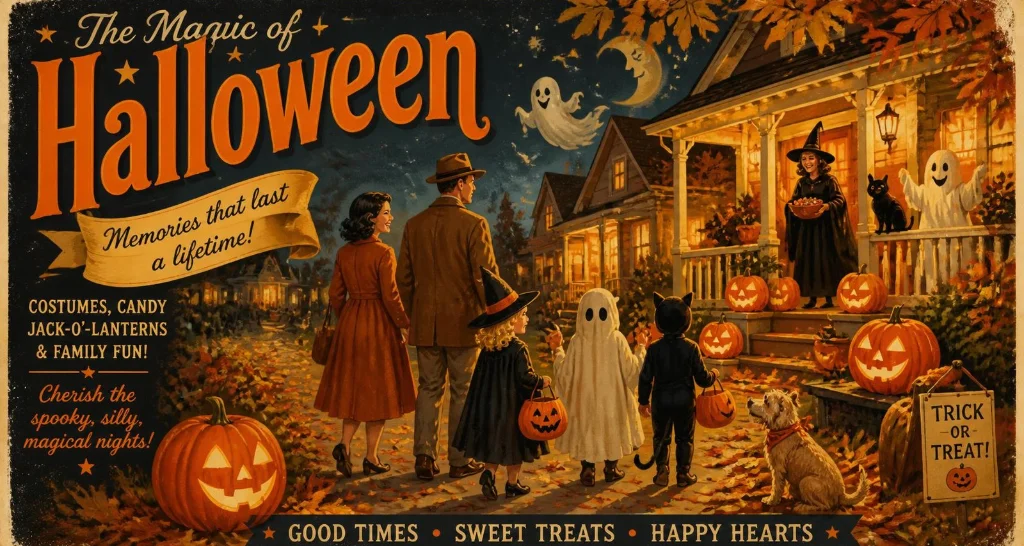
Halloween can transport adults back to childhood faster than almost any other holiday. Halloween nostalgia lives in plastic pumpkin buckets, glowing porch lights, candy trades, and costumes assembled before sunset. For many Americans, those small details made October feel like its own little world.
Halloween nostalgia is the warm attachment people feel toward Halloween memories from earlier years. It often centers on childhood trick-or-treating, costumes, candy, decorations, television specials, and neighborhood traditions. For adults who grew up during the 1980s, 1990s, and early 2000s, familiar seasonal sights can bring those memories rushing back.
| Nostalgic Halloween memory | What people often remember |
| Trick-or-treating | Walking neighborhood streets after dark |
| Costumes | Plastic masks, homemade outfits, capes, face paint |
| Candy | Trading, sorting, and saving favorite pieces |
| Decorations | Jack-o’-lanterns, window clings, skeletons, orange lights |
| Television | Halloween episodes and seasonal movie marathons |
| Stores | Costume aisles and seasonal displays |
| School | Costume parades, parties, crafts, and treats |
| Home | Pumpkin carving and scary movie nights |
| October atmosphere | Cool evenings, fallen leaves, darkness arriving earlier |
Why Halloween Memories Feel So Powerful
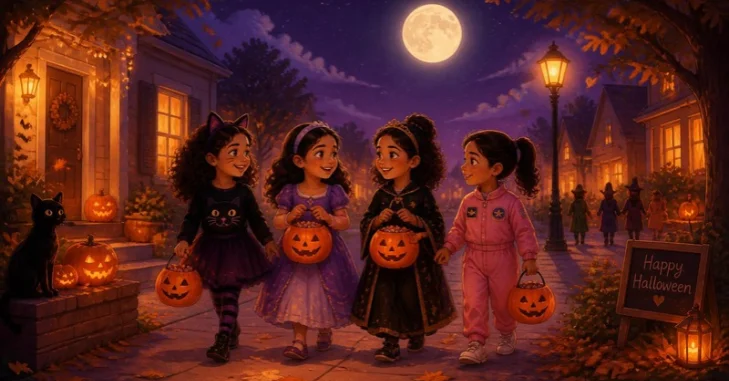
Halloween Nostalgia often brings back memories of childhood Halloween, when anticipation, imagination, and a temporary break from everyday rules made the holiday feel magical. Kids could become monsters, superheroes, witches, cartoon characters, or almost anything else. Ordinary neighborhood streets suddenly looked mysterious once darkness arrived.
The holiday also engaged nearly every sense at once. People remember pumpkin smells, cold air, candy wrappers, scratchy costumes, and orange porch lights. Those sensory details can remain attached to memories for decades.
Nostalgia does not mean every earlier Halloween was objectively better. Childhood changes how experiences are remembered, especially occasions linked with excitement and family traditions. Looking backward can restore some of the wonder adulthood tends to soften.
Halloween Nostalgia Across the 1980s, 1990s and 2000s
Each generation remembers a slightly different version of October. Technology, entertainment, retail trends, and parenting habits changed across those decades. Yet the basic formula remained surprisingly familiar.
| Era | Common nostalgic associations |
| 1980s | Plastic masks, homemade costumes, neighborhood freedom, horror rentals |
| 1990s | VHS tapes, Halloween TV episodes, mall displays, candy commercials |
| Early 2000s | DVD nights, Disney-era Halloween movies, themed snacks, internet culture |
Someone growing up during the 1980s might remember inexpensive masks and neighborhood roaming. A 1990s child may remember choosing VHS movies and watching seasonal television episodes. Early 2000s kids added DVDs, internet culture, and newer cable traditions to the mix.
1. Trick-or-Treating Felt Like a Neighborhood Adventure
For many children, Halloween night meant being outside after normal evening routines ended. Streets looked different under porch lights, decorations, and carved pumpkins. Even familiar houses could seem strange after dark.
The experience was also unpredictable in a way children loved. One house might give miniature chocolate bars, while another offered something unexpected. Every front door became a tiny mystery with an edible reward.
That neighborhood experience appears repeatedly in nostalgic recollections of the holiday. Memories often center on siblings, friends, neighbors, and the journey between houses. The candy mattered, but the adventure surrounding it mattered too.
2. The Candy Sorting Was Almost as Important as Collecting It
The real negotiations often began after everyone returned home. Candy was dumped onto tables, carpets, or living-room floors for inspection. Children quickly developed their own systems for sorting the evening’s haul.
Chocolate might occupy one pile while fruity candy filled another. Unwanted pieces became trading currency between siblings and friends. Premium favorites could demand surprisingly complicated exchanges.
The ritual stretched Halloween beyond the final doorstep. A full bucket represented an evening of effort, luck, and careful choices. Finding one forgotten favorite the following afternoon could extend the celebration again.
3. Halloween Costumes Were Often Imperfect, and That Was Part of the Fun
Older costumes weren’t always elaborate or realistic. Plenty involved face paint, household supplies, inexpensive masks, oversized clothing, or whatever parents could assemble. The limitations often encouraged more imagination.
Store-bought costumes also became memorable because they reflected their era. Popular television characters, movie heroes, monsters, and celebrities moved from screens into school parades. Old photographs now preserve those trends better than most costume catalogs.
Imperfection gave these outfits personality. A homemade ghost didn’t require professional makeup or a coordinated photo session. If friends recognized the idea, the costume had already succeeded.
4. Halloween Television Became an October Calendar
Before streaming libraries offered instant choices, television schedules shaped seasonal viewing. A Halloween episode could feel special because viewers had to catch it when broadcasters aired it. Missing the broadcast might mean waiting for another chance.
Movie rentals added another ritual. Choosing a VHS tape could become part of the evening rather than a five-second decision. The physical trip helped build anticipation before anyone pressed play.
Several titles became closely tied to October for different generations. Family movies, horror films, cartoons, and Halloween specials created personal viewing traditions. Rewatching them today can recreate part of that older seasonal rhythm.
Readers who enjoy that pop-culture connection can browse Newssnaut’s Entertainment section for more movie and cultural coverage.
5. Halloween Decorations Looked Simpler but Became Unforgettable
Many remembered decorations weren’t expensive display pieces. They were paper skeletons, plastic pumpkins, cotton spiderwebs, window clings, and homemade ghosts. Their simplicity made them easy to recognize from year to year.
Today’s renewed interest in vintage-inspired décor shows how durable those images remain. Smiling pumpkins, black cats, ghosts, and retro-style decorations continue appearing in modern seasonal collections. Their appeal comes partly from making a new room feel strangely familiar.
That familiarity matters more than historical accuracy. A newly manufactured decoration can still remind someone of a grandparent’s house or childhood classroom. The emotional connection comes from the visual language, not the object’s age.
6. School Made Halloween Feel Bigger Than One Night
Halloween often started before children reached their neighborhoods. School activities could include costume parades, classroom decorations, art projects, themed worksheets, and small parties. That made the holiday feel larger than October 31 alone.
The school day also created anticipation. Students saw classmates’ costumes and talked about their evening plans. By dismissal time, trick-or-treating could feel like the grand finale of an all-day event.
Those traditions varied between schools and generations. Yet classroom celebrations remain a strong memory for many American adults. They connected a private family holiday with a larger childhood community.
7. Stores Helped Announce That Halloween Was Coming
Long before October 31 arrived, stores signaled the season’s approach. Candy bags appeared beside costumes, plastic decorations, masks, and party supplies. For children, those aisles could make Halloween suddenly feel close.
Shopping also provided clues about current pop culture. Costume racks reflected popular movies, television characters, toys, and celebrities. Candy packaging and seasonal promotions added another layer to the year’s visual identity.
Retail still plays that role, although retro styling has become part of the modern mix. Vintage-inspired Halloween merchandise lets adults buy objects resembling decorations they remember. In that sense, nostalgia has become part of Halloween’s current style.
For broader culture and everyday-interest coverage, readers can also explore Newssnaut’s Lifestyle stories.
8. Halloween Had a Distinct Soundtrack
Music could change a normal room into a Halloween party within seconds. Songs connected with monsters, suspense, and spooky movies returned every October. Television commercials added another seasonal soundtrack.
Sounds outside mattered too. Footsteps on sidewalks, doorbells, laughing children, rustling leaves, and distant voices became part of Halloween night. Those ordinary sounds gained meaning because they happened during a special event.
That helps explain why hearing an old seasonal song can feel surprisingly emotional. Music often carries memories of the people and places surrounding the original experience. The listener remembers more than the song itself.
9. The Best Part May Have Been the Anticipation
Halloween wasn’t confined to several hours after sunset. Children could spend weeks discussing costumes, noticing decorations, watching seasonal programs, and planning their candy routes. October slowly built toward one specific night.
Adults can recreate the activities, but recreating that anticipation is harder. Children experience annual traditions with fewer previous versions available for comparison. Each Halloween can therefore feel enormous.
That may be the hidden engine behind Halloween nostalgia. Adults aren’t only missing old candy wrappers or plastic buckets. They may be remembering how exciting it felt to wait for something.
Why Does Halloween Feel Different as an Adult?
Adults experience the same holiday from a different position. They may buy the candy, supervise children, drive between events, decorate homes, or manage schedules. Responsibilities replace some of the mystery that once surrounded the evening.
Technology has changed the experience too. Streaming removes the wait for scheduled programming, while phones document moments instantly. Online shopping can replace the annual search through crowded costume aisles.
Those changes don’t make modern Halloween worse. They make it different because today’s adults aren’t experiencing it as their childhood selves. Nostalgia often measures the distance between those two perspectives.
How to Bring Back an Old-School Halloween Feeling
Recreating an earlier mood doesn’t require turning your house into a museum. Choose several traditions that mattered during your childhood and repeat them deliberately. Familiar rituals usually create more emotional connection than buying dozens of retro products.
Try these ideas:
- Carve pumpkins instead of relying only on artificial decorations.
- Use orange lights, paper decorations, or simple window clings.
- Watch one childhood Halloween favorite without multitasking.
- Make a bowl containing candy you remember from earlier years.
- Look through old costume photographs with family members.
- Create a Halloween playlist from your childhood or teenage years.
- Let children sort and trade candy after trick-or-treating.
- Visit a neighborhood event, pumpkin patch, or community celebration.
- Tell younger relatives what Halloween looked like when you were their age.
The goal isn’t to reproduce a specific year perfectly. Build a night around attention, anticipation, and shared traditions. Those ingredients created many of the memories people are trying to recover.
Newssnaut covers entertainment, culture, lifestyle, and other everyday topics across the site. Visit the Newssnaut homepage to discover more stories after your October trip down memory lane.
The Halloween Magic Isn’t Gone
Older Halloween memories can make past Octobers seem warmer, stranger, and more exciting than the present. Part of that feeling comes from costumes, television, candy, decorations, and neighborhood traditions. Another part comes from remembering childhood itself.
That doesn’t mean Halloween’s magic belongs only to the past. Traditions survive because people repeat them, change them, and hand them to someone younger. The plastic pumpkin bucket may look different, but the anticipation can still begin when October arrives.
Frequently Asked Questions
What is Halloween nostalgia?
Halloween nostalgia describes sentimental feelings connected with earlier Halloween experiences. Those memories can involve costumes, trick-or-treating, candy, television, decorations, school celebrations, and family traditions.
The feeling often becomes stronger when a familiar sensory cue appears. An old song, decoration, movie, or candy wrapper can reconnect someone with a specific period. That association helps explain the popularity of retro Halloween imagery.
Why do people miss 1990s Halloween so much?
People who grew up during the 1990s now have enough distance from childhood to view that decade nostalgically. Halloween memories from the era often include VHS rentals, cable television, mall shopping, school parties, and neighborhood trick-or-treating.
The decade also sits between two technological periods. Television remained scheduled, while home video gave families more viewing choices. That combination created seasonal rituals that feel distinct today.
Why are vintage Halloween decorations popular again?
Retro decorations offer familiar shapes, colors, and characters associated with earlier celebrations. Modern versions often use smiling pumpkins, black cats, ghosts, and old-fashioned graphic styles. These designs can evoke childhood without requiring genuine antiques.
The trend also fits a broader desire for warmer, playful Halloween décor. Not everyone wants realistic horror displays. Vintage-inspired pieces provide a friendlier alternative that still feels seasonal.
What makes childhood Halloween memories so strong?
Halloween combines unusual clothing, food, darkness, social activity, and repeated annual traditions. Those features give the event many memorable sensory cues. The anticipation before the holiday can strengthen those associations further.
Childhood also gives the evening a different scale. A short walk around several blocks can feel like a major adventure. Adults often remember that sense of possibility alongside the physical details.
Can families create Halloween nostalgia for children today?
Yes, because nostalgia begins with repeated experiences that later become meaningful memories. Families don’t need to copy the 1980s or 1990s. They need traditions children can recognize and anticipate each year.
A pumpkin-carving night, annual movie, neighborhood route, or candy-trading ritual can become that tradition. Consistency gives those activities emotional weight. Today’s ordinary Halloween routine may become someone’s favorite memory decades from now.
