


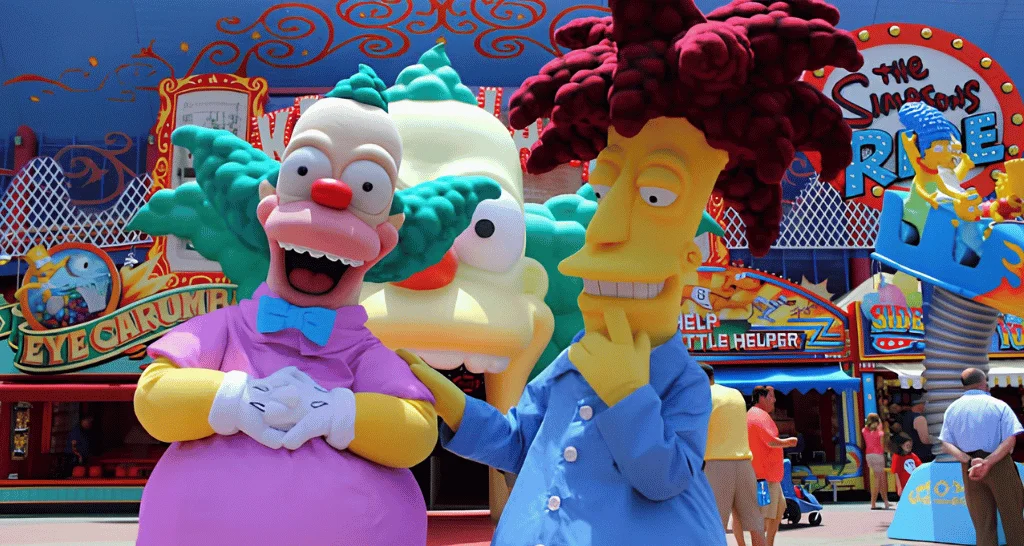
Krusty the Clown is one of Springfield’s most recognizable supporting characters. He hosts children’s television while living a much messier life away from the cameras. That contradiction has made him a memorable part of The Simpsons since 1989.
Direct answer: The character is Springfield’s cynical children’s television clown, voiced by Dan Castellaneta. His full name is Herschel Shmoikel Pinchas Yerucham Krustofsky. He debuted in a 1989 Tracey Ullman Show short. His design echoes Homer Simpson, while his personality satirizes celebrity, television merchandising, and exhausted show business.
| Quick fact | Answer |
|---|---|
| Full name | Herschel Shmoikel Pinchas Yerucham Krustofsky |
| Series | The Simpsons |
| Occupation | Television clown and entertainer |
| Voice actor | Dan Castellaneta |
| First television appearance | January 15, 1989 |
| First appearance | “The Krusty the Clown Show” short |
| Father | Rabbi Hyman Krustofsky |
| Daughter | Sophie Krustofsky |
| Character inspiration | Portland television clown Rusty Nails |
| Voice inspiration | Bob Bell, Chicago’s longtime Bozo performer |
Key Takeaways
- The character first appeared before the half-hour Simpsons series began.
- Dan Castellaneta performs his distinctive raspy voice.
- Matt Groening drew inspiration from Portland television personality Rusty Nails.
- His resemblance to Homer Simpson came from an abandoned early story concept.
- His private misery contrasts sharply with his cheerful television image.
- Episodes about his family reveal more depth than his public clown persona suggests.
Who Is Krusty the Clown?
He is the television entertainer adored by Bart and other Springfield children. His programs mix live comedy, cartoons, celebrity appearances, and shameless commercial promotion. Away from viewers, he is tired, cynical, impulsive, and frequently frustrated by show business.
That gap between performer and private person drives much of his comedy. Children see a cheerful television hero with colorful hair and a famous laugh. Viewers usually see an exhausted celebrity trying to protect his career and income.
That approach also separates him from simpler cartoon clowns. He can be selfish or careless without becoming a straightforward villain. Episodes often find humor by exposing the person hidden behind the television brand.
Readers who enjoy memorable screen personalities can also explore Newssnaut’s guide to funny movie characters. The same character-first principle explains why many comedy figures remain recognizable. Strong personalities often survive longer than individual jokes.
What Is His Real Name and Family Background?
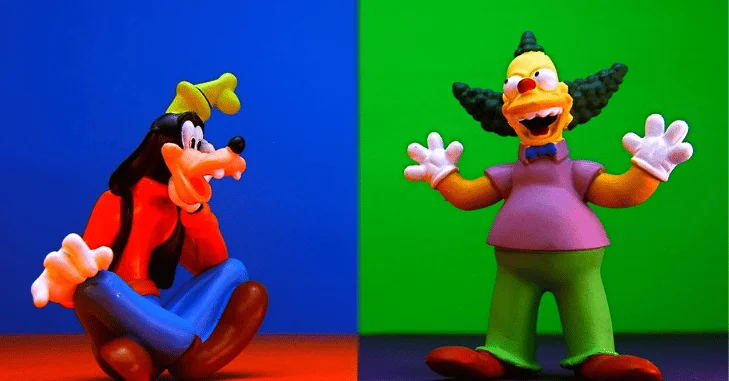
His full name is Herschel Shmoikel Pinchas Yerucham Krustofsky. He comes from a Jewish family led by his father, Rabbi Hyman Krustofsky. Their strained relationship becomes central to one of the character’s most important stories.
His father wanted a different path for his son. Herschel instead chose comedy and entertainment, creating a painful family break. That conflict gives the character an emotional history beneath his exaggerated television behavior.
The series later gives him other family connections, including his daughter Sophie. These stories force the entertainer to confront responsibilities beyond ratings and celebrity. They also show that his personal failures do not erase every possibility for affection.
His heritage adds more than background information. It creates conflicts involving identity, parental expectations, ambition, and reconciliation. Those themes help several episodes move beyond simple jokes about an irresponsible celebrity.
Who Provides the Voice?
Dan Castellaneta voices the Springfield entertainer along with Homer Simpson and several other recurring characters. The Television Academy specifically credits Castellaneta for performing the clown in multiple Emmy-nominated or winning performances. He has discussed the role directly in his Television Academy interview.
The rough voice helps establish the character before viewers even see his behavior. It sounds worn, loud, and unmistakably shaped by years of performing. That sound supports the contrast between his energetic job and exhausted personality.
Castellaneta drew inspiration from Bob Bell’s portrayal of Bozo on Chicago television. Bell performed the character on WGN for decades. That connection roots the fictional entertainer in a genuine American television tradition.
The performance has also earned formal industry recognition. Castellaneta won a 2004 Emmy for voice work, including this character and several others. He received another relevant nomination in 2018 for The Simpsons.
Where Did the Character Come From?
Matt Groening has connected the character’s inspiration to Rusty Nails, a Portland children’s television clown. Groening watched the performer while growing up in Oregon. Rusty Nails was played by James H. Allen, who worked in Portland television for years.
The real performer differed significantly from the fictional creation. Groening remembered him as a pleasant entertainer rather than an embittered celebrity. The unusual “Rusty Nails” name helped leave a lasting childhood impression.
That distinction matters because the animated character is not simply a cartoon copy. Writers combined local television memories with celebrity satire and entertainment-industry jokes. The result became a broader parody of commercial children’s television.
American audiences may recognize the cultural model even without remembering local clown programs. Regional children’s hosts were once regular television fixtures across the country. The character exaggerates that tradition through endorsements, declining standards, and constant career anxiety.
Why Does He Look So Much Like Homer Simpson?
The visual similarity was intentional during the show’s early development. Groening originally considered a concept where Bart worshipped a television clown resembling his own father. One abandoned idea would have connected the entertainer and Homer even more directly.
That concept never became the show’s permanent story. Still, the similar face, head shape, and physical design remained. The resemblance later became useful material for episodes such as “Homie the Clown.”
The visual joke also reinforces something important about Bart. He dismisses Homer while admiring a celebrity with a remarkably similar appearance. That contrast fits the series’ interest in family relationships and television culture.
“Homie the Clown” turns the resemblance into the episode’s central mechanism. Homer trains as a clown and becomes easy to mistake for the famous entertainer. The discarded early idea therefore survived as a later source of comedy.
His Relationship With Bart and Sideshow Bob
Bart begins as a devoted fan who sees his television hero as almost untouchable. “Krusty Gets Busted” challenges that trust when the clown appears responsible for a robbery. Bart and Lisa investigate because Bart refuses to accept the apparent evidence.
Their investigation eventually exposes Sideshow Bob rather than Bart’s idol. Bob had been the entertainer’s abused sidekick before turning against him. That storyline helped establish one of the series’ longest-running rivalries.
The episode also reveals an interesting difference between Bart and his hero. Bart can show loyalty and determination that the celebrity rarely demonstrates. Their relationship therefore works best when admiration meets an imperfect reality.
Sideshow Bob adds another layer to the television satire. He considers himself smarter and more cultured than the program surrounding him. His resentment transforms a children’s show conflict into one of Springfield’s recurring feuds.
Essential Episodes for Understanding the Character
Several episodes reveal different parts of the character better than a simple biography can. Some focus on family, while others explore fame, failure, or commercial excess. These five provide a useful starting point for newer viewers.
- “Krusty Gets Busted” introduces his major conflict with Sideshow Bob and tests Bart’s loyalty.
- “Like Father, Like Clown” explores his Jewish heritage and difficult relationship with his father.
- “Kamp Krusty” turns his heavily commercialized brand into the center of a disastrous children’s camp.
- “Krusty Gets Kancelled” examines what happens when the aging entertainer loses his audience.
- “Homie the Clown” builds an entire story around his physical resemblance to Homer.
These stories also show why he works across different types of plots. He can drive family drama, entertainment satire, crime stories, and absurd comedy. Few Springfield supporting characters move between those roles as easily.
Fans interested in older entertainment memories may also enjoy Newssnaut’s look at American nostalgia and childhood memories. Popular culture often stays meaningful because viewers connect characters with particular periods of their lives. Long-running animated television can create the same effect.
Why the Character Still Works
The strongest joke is not simply that a clown behaves badly. The comedy comes from seeing entertainment as both fantasy and exhausting work. His public smile and private frustration create that contrast in almost every appearance.
He also reflects changing ideas about celebrity. His name appears on products, businesses, promotions, television programs, and questionable commercial ventures. The exaggeration feels familiar because audiences understand celebrity branding far beyond television.
Yet the writers occasionally let the character become sincere. Stories involving his father, daughter, or declining career give consequences to his choices. Those moments prevent the character from becoming a single repeated joke.
His longevity also reflects the flexibility of The Simpsons. A supporting character can disappear for stretches and return when a story needs him. New viewers can usually understand his basic personality without knowing every earlier episode.
For more pop-culture coverage, readers can browse Newssnaut’s entertainment section. Character histories work best when they connect individual facts with the larger culture around them. That context explains why certain fictional personalities remain recognizable.
Frequently Asked Questions
Who voices Krusty the Clown?
Dan Castellaneta provides the character’s English-language voice on The Simpsons. He also performs Homer Simpson, Grampa Simpson, Groundskeeper Willie, and several other Springfield residents. The Television Academy has credited his work on the clown in Emmy nominations and awards.
What is the character’s real name?
His full name is Herschel Shmoikel Pinchas Yerucham Krustofsky. The series uses his family name when exploring his Jewish background and relationship with his father. His stage identity becomes the famous name known across Springfield.
When did he first appear?
The character first appeared on January 15, 1989. His debut came in “The Krusty the Clown Show,” a Simpsons short on The Tracey Ullman Show. That appearance predates the half-hour series that premiered later in 1989.
Who inspired the character?
Matt Groening has identified Portland television clown Rusty Nails as an important inspiration. Rusty Nails was the performing identity of James H. Allen. The fictional personality became much more cynical than the entertainer Groening remembered from childhood.
Why does he resemble Homer?
The resemblance comes from an early creative idea involving Bart, Homer, and the television clown. Groening wanted irony in Bart admiring an entertainer resembling the father he frequently disrespected. The secret-identity concept disappeared, but the visual similarity remained.
Does he have a daughter?
Yes, the series identifies Sophie as his daughter. Their relationship reveals a less familiar side of the unreliable entertainer. Family stories often provide his strongest moments outside television-show satire.
A Television Clown Built to Outlast the Joke
The character has survived because his purpose extends beyond clown jokes. He represents celebrity, commercial television, damaged ambition, and the gap between performers and their public images. Those ideas remain understandable even as American television changes.
His strongest stories also give Bart’s idol recognizable personal problems. Fame does not repair his family relationships or make him satisfied. That tension gives the writers more material than his colorful appearance might suggest.
New viewers can start with the five episodes above and follow whichever side interests them most. Longtime fans can revisit them for the character details hidden beneath the satire. For more screen culture and character coverage, continue through Newssnaut’s entertainment section.
—–
