



A bicameral legislature divides legislative power between two separate chambers rather than placing it in one lawmaking body. In the United States, those chambers are the House of Representatives and the Senate. This arrangement shapes representation, debate, voting, and nearly every federal law that reaches the president.
Short answer: A bicameral legislature is a lawmaking body divided into two chambers. In the United States, Congress consists of the House of Representatives and the Senate. Most federal bills must pass both chambers in identical form before reaching the president, adding another level of review while balancing population-based and state-based representation.
U.S. Bicameral System at a Glance
| Feature | How It Works in the United States |
| Legislative branch | U.S. Congress |
| Two chambers | House of Representatives and Senate |
| House representation | Based largely on state population |
| House voting membership | 435 representatives |
| House terms | 2 years |
| Senate representation | 2 senators from every state |
| Senate membership | 100 senators |
| Senate terms | 6 years, with staggered elections |
| Passing federal bills | Both chambers must approve the same text. |
| Unicameral U.S. state | Nebraska |
The House has 435 voting representatives, each elected for a two-year term from a congressional district. The Senate has two senators from each state, and senators serve six-year terms. Nebraska is the only U.S. state that uses a one-chamber state legislature.
Key Takeaways
- “Bicameral” means that a legislature has two chambers.
- Congress is divided into the House of Representatives and the Senate.
- The House represents people largely according to population, while every state receives two senators.
- Both chambers normally must agree on identical bill text before it can reach the president.
- Two chambers can increase review and representation, but they can also make legislation slower.
- Nebraska provides the main U.S. state-level example of a unicameral system.
What Does Bicameral Mean in Government?
The word “bicameral” refers to a legislative institution consisting of two chambers or houses. Each chamber can have its own members, procedures, leadership, election rules, and constitutional responsibilities. The two bodies then participate in a shared legislative process rather than acting as one assembly.
In the federal government, the two houses are separate but closely connected. A proposal may receive strong support in one chamber and fail in the other, preventing it from becoming federal law. That structure is the basic logic of a bicameral legislature: major legislation must survive review by two independently organized groups of lawmakers.
Why the U.S. Uses a Bicameral Legislature
The American system emerged from debates at the Constitutional Convention of 1787. Delegates from larger states wanted representation tied more closely to population, while smaller states feared losing influence under that system. The compromise created a House based on population and a Senate offering equal state representation.
This agreement became known as the Great Compromise, or Connecticut Compromise. It helped resolve one of the Convention’s central disagreements and contributed to the structure established by Article I of the Constitution. Article I states that Congress consists of a Senate and House of Representatives.
The arrangement also created an internal check within the legislative branch. Representatives and senators answer to different constituencies and serve different term lengths, so the two chambers can approach legislation differently. Requiring agreement can prevent one temporary majority from controlling the entire federal legislative process.
House of Representatives vs. Senate
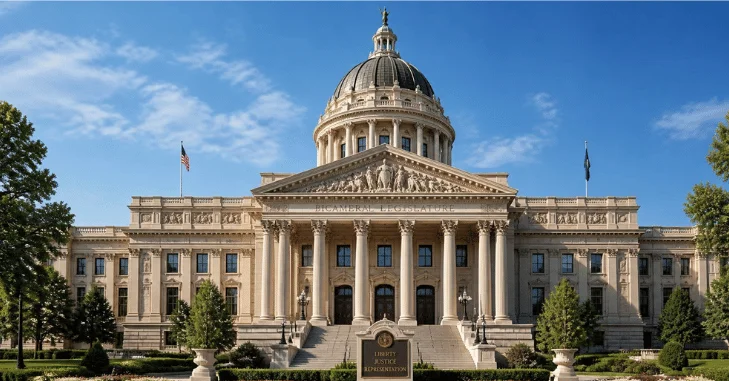
The House and Senate share federal lawmaking duties, but their structures are intentionally different. House membership reflects population, while Senate representation gives every state equal weight regardless of population. Their different terms also create different electoral pressures for members.
| Feature | House of Representatives | Senate |
| Voting members | 435 | 100 |
| Representation | Congressional districts based on population | Two senators per state |
| Term length | 2 years | 6 years |
| Election cycle | The entire House faces regular two-year elections. | Roughly one-third of seats are elected every two years. |
| Impeachment | Has the sole power to impeach | Conducts impeachment trials |
| Presidential nominations | No confirmation role | Provides advice and consent |
| Treaties | No constitutional advice-and-consent vote | Approves resolutions of ratification by required supermajority |
These differences mean the chambers are not duplicate copies of each other. The House can respond more quickly to changes in voter preferences because representatives face election every two years. The Senate was designed with longer, staggered terms that provide greater institutional continuity.
The Constitution also assigns certain responsibilities specifically to one chamber. The House has the sole power of impeachment, while the Senate conducts impeachment trials. The Senate also considers many presidential nominations and gives advice and consent on treaties.
How Two Chambers Affect the Lawmaking Process
For most federal legislation, winning a vote in one chamber is not enough. The House and Senate must ultimately approve the same legislative text before a bill can be presented to the president. If one chamber changes the measure, the differences must be resolved before the legislative process can advance.
A simplified path looks like this:
- A bill is introduced in the House or Senate.
- Committees may review, amend, or decline to advance it.
- The originating chamber considers and votes on the proposal.
- The other chamber considers its version of the legislation.
- Differences between the House and Senate versions must be resolved.
- Both chambers approve identical final text.
- The approved bill is presented to the president.
The extra chamber creates another point where lawmakers can question, change, delay, or reject legislation. Supporters view that review as protection against rushed decisions. Critics can view the same process as a source of delay when the chambers cannot reach an agreement.
Advantages and Disadvantages of Two-Chamber Lawmaking
One major advantage is broader representation. The House gives more populous states more representatives, while the Senate gives every state two seats. Combining those systems allows legislation to face both population-based and state-based political tests.
A second benefit is added scrutiny. Bills can be examined by two sets of committees and lawmakers before becoming law, creating another opportunity to identify objections or amend provisions. Political-science texts also describe the second chamber as another “veto point” that can restrain legislation lacking sufficiently broad support.
The same design has costs. Legislation can take longer because approval from one house does not guarantee approval from the other, and competing versions can require further negotiation. Political disagreement between the chambers can also produce gridlock even when one house strongly supports a proposal.
Main Benefits
- Provides two levels of legislative review.
- Balances different forms of political representation.
- Makes sudden legislative changes more difficult.
- Creates an internal check within Congress.
- Allows the chambers to develop different areas of responsibility.
Main Drawbacks
- Can slow the passage of legislation.
- Creates more opportunities for bills to fail.
- May produce gridlock between competing majorities.
- Requires two institutions to maintain staff, committees, and procedures.
- Can make the legislative process harder for citizens to follow.
Bicameral vs. Unicameral Government
A unicameral legislature has only one chamber, while a two-chamber system divides legislative authority between two bodies. The practical difference reaches beyond the number of meeting rooms. It affects representation, the number of approvals a bill needs, and the speed at which lawmakers can act.
| Question | Bicameral System | Unicameral System |
| Number of chambers | Two | One |
| Legislative review | Bill faces two chambers. | Bill faces one chamber. |
| Potential speed | Usually slower | Can be faster |
| Additional legislative check | Yes. | No second chamber |
| Representation models | Can combine different systems | Usually one representation system |
| U.S. federal example | Congress | None |
| U.S. state example | 49 states | Nebraska |
Neither structure automatically produces better laws. A one-house system can make responsibility clearer and reduce procedural barriers, while a two-house system can broaden review and representation. The preferred model depends on a country’s constitutional design, political structure, and goals.
Why Is Nebraska Different?
Nebraska is the only state in the United States with a unicameral state legislature. Its lawmakers meet in one legislative chamber rather than separate state House and Senate bodies. The Nebraska Legislature also describes its institution as the country’s only state legislature without a bicameral structure.
That makes Nebraska a useful comparison for students studying American government. The Federal Congress and the other 49 state legislatures provide two-chamber examples, while Nebraska shows how state lawmaking can operate with one chamber. Comparing them makes the tradeoff between additional review and procedural simplicity easier to see.
Why This Structure Matters to U.S. Voters
The design affects more than civics exams because it determines what elected officials can accomplish. A representative may vote for legislation that never advances because the Senate rejects it, and the reverse can also happen. Understanding both chambers makes election results and congressional negotiations easier to interpret.
It also explains why control of either chamber carries political importance. A party does not need to control both houses to influence whether legislation reaches the president, because either chamber can become a major obstacle to a bill. This feature makes congressional elections consequential even when the presidency is not on the ballot.
Readers following government, constitutional questions, or public policy can find related material through Newssnaut’s Law. Those pages collect explainers on how American institutions work and why the rules behind them matter. For another U.S.-politics-focused article, Newssnaut has a profile of Evan Child, Support Lawyer.
The Bottom Line
America’s two-house Congress reflects a constitutional choice to divide legislative decision-making rather than concentrate it in one assembly. The House emphasizes representation tied to population, while the Senate gives equal representation to each state. Requiring agreement between them can slow legislation, but that additional hurdle is also one of the system’s intended checks.
Understanding this structure makes congressional news easier to follow. A bill passing “Congress” requires more than a successful vote in one chamber, and the House and Senate can exercise different constitutional powers. For U.S. voters and students of government, those distinctions explain much of how federal lawmaking works.
Frequently Asked Questions
A bicameral legislature is a lawmaking institution split into two separate chambers. In the United States, these are the House of Representatives and the Senate. Both participate in making federal laws, although each chamber also has distinct constitutional responsibilities.
The two-house structure resulted partly from the Great Compromise reached during the Constitutional Convention of 1787. It balanced demands for population-based representation with demands for equal representation among the states. The arrangement also added another check within the legislative branch.
For a bill to be presented to the president, the House and Senate must approve the legislation in the same form. One chamber’s approval alone does not complete the federal legislative process. If their versions differ, Congress must resolve those differences before final passage.
The House has 435 voting representatives from the 50 states, with representation distributed by population. The Senate has 100 members because each of the 50 states elects two senators. Representatives serve two-year terms, while senators serve six-year terms.
Nebraska is the only U.S. state with a unicameral state legislature. Its state lawmaking body operates as one chamber rather than separate upper and lower houses. Every other state uses a two-chamber legislative structure.
