


Baskin Robbins Daiquiri Ice is a tart frozen lime treat with a splash of rum flavoring. It has an icy texture rather than the creamy body of traditional ice cream. The flavor remains a distinctive choice for people who prefer bright citrus over chocolate or vanilla.
Baskin-Robbins currently describes the flavor as non-dairy and fat-free. Its official U.S. nutrition guide also lists it as a permanent flavor. Availability can still vary by store and grocery retailer.
Quick answer: Daiquiri Ice combines tangy lime flavor with a light rum-inspired note in a frozen ice base. It contains no dairy ingredients in Baskin-Robbins’ published description and has zero grams of fat. The official ingredient list lists rum flavoring, not rum itself, as part of the flavor profile.
Daiquiri Ice at a Glance
| Detail | What to know |
|---|---|
| Flavor | Tart lime with rum flavoring |
| Texture | Light, icy, and less creamy than ice cream |
| Dairy ingredients | None listed in the official formulation |
| Fat | 0 grams in current U.S. scoop nutrition data |
| Calories | 90 per 2.5-ounce scoop; 140 per 4-ounce scoop |
| Main sweeteners | Sugar and corn syrup |
| Color sources | Spirulina extract and beta carotene |
| Vegan status | Described by Baskin-Robbins as vegan-friendly |
| Alcohol | Alcohol is not listed in the published ingredient list |
| Availability | Current official materials still list the flavor |
Current nutrition information lists 90 calories for a 2.5-ounce scoop. A four-ounce serving contains 140 calories and zero grams of fat. Packaged grocery versions may use different serving sizes, so check their labels.
Key Takeaways
- The flavor centers on tart lime with a rum-inspired taste.
- It is an ice, rather than conventional dairy ice cream.
- Baskin-Robbins describes it as non-dairy, fat-free, and vegan-friendly.
- The official ingredient list does not name alcoholic rum as an ingredient.
- Current company materials continue to list the flavor.
- Local scoop-shop and grocery availability can differ.
What Does Baskin Robbins Daiquiri Ice Taste Like?
The first taste is sharp, sweet lime rather than creamy sweetness. A rum-style flavor sits behind the citrus and gives the dessert its cocktail-inspired character. The result tastes brighter and lighter than most dairy-based flavors.
The texture also shapes the experience. Traditional ice cream uses dairy and milk fat to create richness. This flavor uses an ice base, so it feels colder, cleaner, and more refreshing on the tongue.
People expecting an actual frozen cocktail may find the name misleading. The published ingredient list does not list rum as an alcoholic ingredient. Instead, Baskin-Robbins describes the product as lime ice with rum flavoring.
That distinction helps explain its long-running appeal. It delivers familiar daiquiri-style notes without the heavy texture of standard ice cream. Fans often choose it when they want something tart after a rich meal.
Is Daiquiri Ice Ice Cream, Sorbet, or Sherbet?
It is best understood as an ice rather than conventional ice cream. Baskin-Robbins distinguishes ice cream, sherbet, and fruit-forward frozen options by their ingredients and dairy content. Ice cream contains dairy, while sherbet usually contains less.
| Frozen dessert | Dairy | Typical texture | General flavor style |
|---|---|---|---|
| Ice | No dairy ingredients in this formulation | Light and icy | Bright and refreshing |
| Sherbet | Usually contains some dairy | Softer and slightly creamy | Fruit-forward |
| Ice cream | Dairy-based | Rich and creamy | Wide range of flavors |
That difference matters for both taste and dietary choices. An ice will not deliver the same creamy mouthfeel as vanilla or chocolate ice cream. It instead emphasizes the lime and sweet-tart character.
Baskin-Robbins also separates Daiquiri Ice from Rainbow Sherbet in its menu materials. That reinforces the difference between the two frozen dessert types. Shoppers should not assume every fruit-flavored scoop is automatically dairy-free.
What Ingredients Are in It?
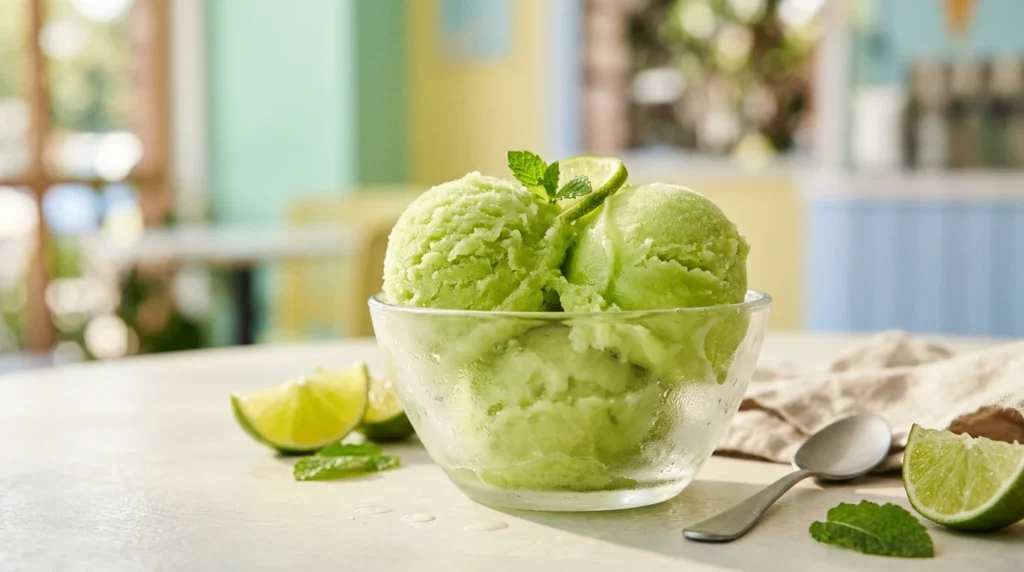
The current packaged formulation begins with water, sugar, corn syrup, and a lime puree base. The lime base includes water, sugar, lime juice concentrate, and natural flavor. Other ingredients include citric acid, stabilizers, natural and artificial flavors, and plant-derived colors.
The stabilizers include locust bean gum, modified cellulose, and guar gum. These ingredients help give the frozen product a smoother structure. Spirulina extract and beta carotene provide color without being listed as main flavor ingredients.
Ingredient information can change over time or vary by format. A scoop-shop product and a grocery container may also carry different packaging disclosures. Check the current label when allergies or strict dietary restrictions matter.
Is Daiquiri Ice Dairy-Free and Vegan?
Baskin-Robbins calls the flavor non-dairy and includes it within its vegan-friendly menu guidance. The company defines vegan-friendly items as having no animal-source ingredients. That includes milk, egg, meat, fish, honey, and animal-derived enzymes.
That statement does not make the restaurant allergen-free. Baskin-Robbins warns that products are prepared around items containing dairy and other allergens. Cross-contact can therefore occur during manufacturing or restaurant service.
People who avoid dairy by preference may still find the flavor useful. Someone with a serious milk allergy needs a different level of caution. The company says its non-dairy guidance isn’t an allergy guarantee.
If you enjoy comparing drinks and food choices by ingredients, Newssnaut also has a detailed guide to decaf green tea and its caffeine trade-offs. That article takes a similar label-first approach. Reading the actual formulation is usually more useful than relying on a product name.
Does Daiquiri Ice Contain Alcohol?
The current published ingredient list does not list alcohol or alcoholic rum. Baskin-Robbins instead describes the product as having a splash of rum flavoring. That wording points to a cocktail-inspired flavor rather than a standard alcoholic frozen drink.
Still, consumers with religious, medical, pregnancy, or recovery-related concerns may want stronger confirmation. Flavoring formulations are not fully explained in the public ingredient list. Ask Baskin-Robbins directly if trace alcohol content would affect your decision.
The name alone shouldn’t drive that choice. “Daiquiri” describes the flavor inspiration, while the ingredient list tells you what is disclosed. Checking both avoids assumptions based only on branding.
Calories, Sugar, and Nutrition
A current Baskin-Robbins U.S. nutrition guide lists 90 calories for one 2.5-ounce scoop. That serving has zero grams of fat, 22 grams of carbohydrates, and 17 grams of sugar. It also contains zero grams of protein.
A four-ounce scoop increases to 140 calories. It contains 35 grams of carbohydrates and 27 grams of total sugar. Of that sugar, 26 grams are listed as added sugar.
Those numbers make the trade-off easy to understand. The flavor is fat-free, but it isn’t sugar-free or low-carb. Most of its calories come from sweeteners rather than fat or protein.
Retail containers may show different values because their serving size differs. Current grocery listings for the 14-ounce package show their own nutrition panels. Always compare serving sizes before assuming two calorie numbers contradict each other.
Is Daiquiri Ice Still Available in the United States?
Current evidence indicates that the flavor remains available in the U.S. market. Baskin-Robbins’ current nutrition guide lists it as a permanent flavor. The company’s at-home website also includes a 14-ounce packaged version.
You may still encounter older online claims saying the flavor was discontinued. One widely shared 2022 article reported that it disappeared from local stores. Current first-party and retailer listings show these claims are no longer nationally reliable.
Local stock remains a separate question. Franchise locations do not necessarily carry every permanent flavor every day. Grocery distribution also differs by state, chain, and ZIP code.
Several U.S. grocery and delivery listings currently show 14-ounce containers for sale. Prices vary substantially between retailers and promotional periods. Check your local Baskin-Robbins or grocery inventory for the most useful answer.
Why the Flavor Has Such a Loyal Following
Few mainstream ice cream chains offer a flavor built around lime and rum notes. That makes this scoop stand apart from familiar chocolate, caramel, cookie, and nut combinations. Its icy texture also gives regular customers a contrasting menu choice.
The flavor has been around long enough to develop nostalgia among longtime customers. Older fan campaigns even complained about changes to its formula and color. That history shows how strongly some customers associate the taste with earlier Baskin-Robbins visits.
Its appeal also comes from simplicity. You mainly taste citrus, sweetness, and the cocktail-inspired note. No cookie chunks or heavy ribbons compete with the lime.
For another chilled option, Newssnaut’s decaf green tea guide explains how processing can change taste and composition. Both topics show why the details behind a familiar food or drink matter. Labels often reveal more than marketing descriptions.
How to Order It
Start by checking your nearest U.S. Baskin-Robbins location before making a special trip. Flavor availability can change because individual stores manage their own inventory. Call ahead if this specific scoop is your goal.
When a location has it, you can order it in a cup or a suitable cone. People avoiding dairy should also consider the cone and toppings separately. A dairy-free scoop can become unsuitable once dairy-containing additions are included.
For strict allergy concerns, tell the employee before ordering. Shared scoops, counters, and preparation areas create possible cross-contact. The company does not promise an allergen-free restaurant environment.
Frequently Asked Questions
What is Baskin-Robbins daiquiri ice made of?
The main ingredients include water, sugar, corn syrup, and a lime puree base. Natural and artificial flavors, citric acid, stabilizers, spirulina extract, and beta carotene are also listed. The formulation is designed as a lime ice rather than dairy ice cream.
Does the flavor have real alcohol?
Alcohol is not listed in the current published ingredient list. Baskin-Robbins describes the taste as lime ice with rum flavoring. Contact the company for specific confirmation if trace alcohol is a personal concern.
Is it dairy-free?
Baskin-Robbins describes the flavor as non-dairy. It also appears on the company’s vegan-friendly guidance. Cross-contact remains possible because stores and manufacturing facilities handle dairy products.
How many calories are in one scoop?
The current U.S. nutrition guide lists 90 calories for a 2.5-ounce scoop. A four-ounce scoop has 140 calories. Serving sizes matter when comparing those numbers with packaged grocery versions.
Is it fat-free?
Yes, the company’s current nutrition data list zero grams of total fat in both measured scoop sizes. The packaged product is also marketed as fat-free. That does not make it sugar-free, since sugar provides much of its energy.
Was the flavor discontinued?
Older reports claimed it disappeared in 2022, but current evidence shows it remains available nationally. Baskin-Robbins currently lists it in official nutrition materials and its packaged lineup. Individual locations may still be temporarily out of stock.
Final Takeaway
This lime-based ice remains one of Baskin-Robbins’ most unusual long-running flavors. Its tart citrus taste, rum-inspired note, and lighter texture separate it from conventional ice cream. Current company materials also make its nutrition and non-dairy status easier to verify.
The most useful takeaway is to separate flavor claims from dietary assumptions. It is fat-free and described as vegan-friendly, yet sugar remains a major ingredient. Cross-contact also matters for people managing serious allergies.
Check your local store if you want to try it today. Grocery shoppers can also look for the current 14-ounce packaged version. For more researched explainers, browse Newssnaut’s latest articles.
