


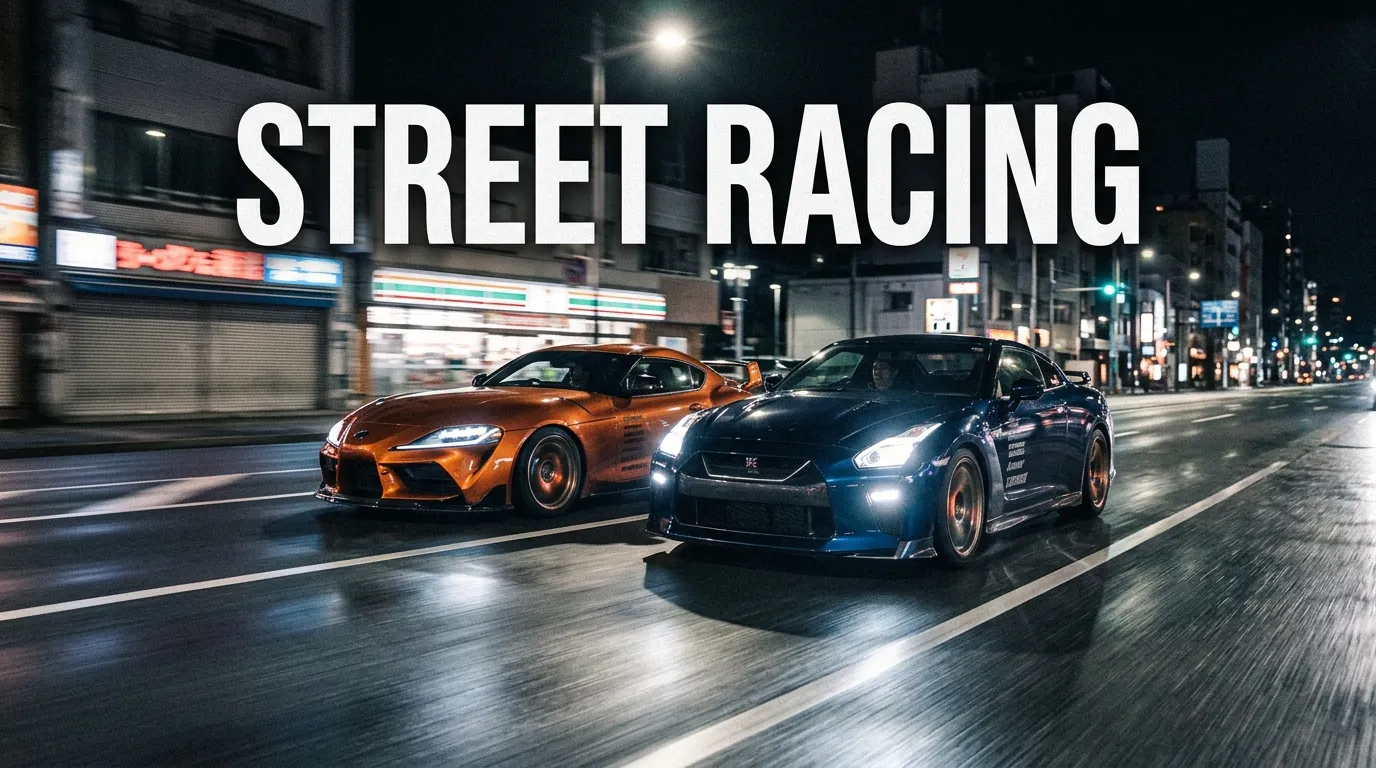
Street racing is illegal competitive driving on public roads, highways, or other unauthorized areas. It can involve drag races, speed contests, drifting, burnouts, and street takeovers. In the United States, laws vary by state, but penalties can include fines, license suspension, vehicle impoundment, and jail time.
The issue also affects people who never intended to participate. A national AAA Foundation survey found that 73% of drivers noticed at least one form of illegal racing during the previous year. Only 4% reported participating, showing how widely the activity can be seen despite limited direct involvement.
| Key fact | U.S. context |
|---|---|
| Main activity | Competitive or exhibition driving on public roads |
| Common forms | Drag racing, drifting, burnouts, weaving, takeovers |
| Legal status | Prohibited across the United States |
| Main risks | Crashes, injuries, property damage, pedestrian danger |
| Penalties | Vary by state and circumstances |
| Safer alternative | Closed-course racing at permitted facilities |
TL;DR: What You Should Know
This activity creates risks because public roads are shared with pedestrians, cyclists, emergency vehicles, and ordinary drivers. Unlike a closed racing facility, a public street lacks controlled runoff areas, trained track personnel, and predictable race conditions. State laws also increasingly address spectators, organizers, filming, and related stunt-driving activity.
If you enjoy performance driving, look for legal motorsports events or closed-course facilities. These settings can provide a controlled place to test a vehicle without turning public traffic into part of the event. Readers interested in automotive topics can also explore Newssnaut’s Automobile coverage for related vehicle content.
What Is Street Racing?
It generally means using a public road for an unsanctioned race or competitive speed event. The activity may involve two drivers accelerating against each other, timed runs, or organized gatherings. AAA also includes related behaviors such as street takeovers, weaving, and other high-speed maneuvers when discussing the public-road problem.
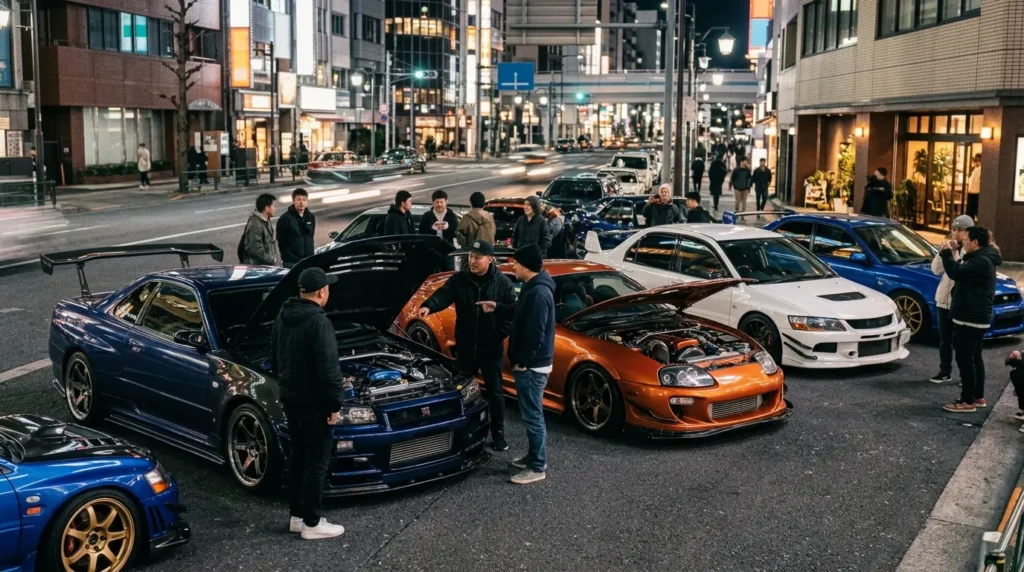
A street takeover is different from a simple race, but the activities can overlap. A takeover may block an intersection or roadway while drivers perform burnouts, donuts, drifting, wheelies, or other stunts. Florida’s 2026 statute specifically defines street takeovers and prohibits several forms of participation and support.
The distinction matters because people can face legal consequences without being the person behind the wheel. Some laws address passengers, spectators, organizers, filming, or people who help coordinate an event. The exact rules depend on the state and the circumstances involved.
Why Is Street Racing Dangerous?
Public roads contain variables that racers cannot control. Traffic signals, pedestrians, turning vehicles, parked cars, road debris, weather, and emergency responses can change conditions within seconds.
High-speed weaving creates additional risks because nearby drivers may not expect sudden lane changes. AAA’s 2026 research found that weaving through traffic was the most commonly observed street-racing behavior in its national survey. About 31% of respondents said they saw that behavior regularly or fairly often.
The consequences can extend beyond the drivers. A crash can injure passengers, bystanders, other motorists, cyclists, or emergency responders. A recent Laredo, Texas, case illustrates the potential severity, after police said a suspected race preceded a three-vehicle crash that seriously injured another driver.
Is Street Racing Illegal in the United States?
Yes, although wording and penalties differ by jurisdiction. Nolo’s 2026 legal overview states that all states prohibit it, while related exhibition-of-speed laws can cover conduct beyond traditional racing.
State lawmakers have also continued changing these rules. NCSL reported that 10 states enacted at least 12 bills during 2025 involving aggressive driving and street exhibitions. Those measures covered activities such as speed contests, burnouts, donuts, and other reckless vehicle maneuvers.
For readers who want more legal topics, Newssnaut’s Law section provides related legal explainers. Always check state statutes before relying on a specific penalty, because definitions and sentencing rules can change.
What Penalties Can Drivers Face?
No single nationwide penalty applies to illegal racing. Courts and law enforcement may consider the location, driving behavior, prior offenses, injuries, property damage, and other circumstances.
Possible consequences are listed below.
- Traffic citations or criminal charges.
- Fines and court costs.
- Driver’s license suspension or revocation.
- Vehicle towing or impoundment.
- Probation or other court conditions.
- Jail or prison time in serious cases.
- Greater penalties when someone is injured or killed.
Pennsylvania, for example, increased penalties for racing and exhibitions under legislation summarized by NCSL. The rules include higher fines for repeat violations and allow vehicle impoundment for certain offenses.
Florida provides another example of how broad these laws can become. Its 2026 statute prohibits drivers from participating in races, street takeovers, stunt driving, speed competitions, and certain related activities on highways, roadways, and parking lots. The statute also addresses coordination, passengers, traffic obstruction, filming, and fueling activities connected with prohibited events.
How Do Street Takeovers Differ From Legal Racing?
Legal motorsports take place under organized conditions that differ sharply from public-road driving. A sanctioned event can control access, establish rules, manage participants, and separate racing activity from ordinary traffic.
Street takeovers instead use public or other unauthorized areas for stunts and exhibitions. AAA describes them as gatherings where vehicles can block traffic and perform actions such as drifting or circular skids.
| Factor | Public-road racing | Legal track event |
|---|---|---|
| Road access | Open or improperly blocked | Controlled |
| Other traffic | Present | Separated |
| Event rules | Often informal | Established |
| Emergency planning | Limited | Track-based procedures |
| Spectator area | Often uncontrolled | Designated areas |
| Legal authorization | Generally absent | Required or established |
The difference is not simply about speed. It also depends on whether the environment is designed to manage racing activity without exposing ordinary road users to the same hazards.
What Should Drivers Do Instead?
Drivers who enjoy speed or vehicle performance have legal options. Closed-course events, drag strips, autocross competitions, and other sanctioned motorsports can provide structured environments for performance driving.
Before attending an event, check its rules and requirements. Some facilities require helmets, technical inspections, registration, safety equipment, or specific vehicle conditions.
A practical checklist includes:
- Find a permitted racing facility or sanctioned event.
- Review the event’s driver and vehicle requirements.
- Confirm required safety equipment before arrival.
- Inspect the vehicle for mechanical or tire problems.
- Follow the facility’s speed, passing, and conduct rules.
- Keep racing activity away from public roads.
These steps do not make motorsports risk-free. They help move performance driving into an environment designed to manage those risks.
What Can Communities Do About Illegal Racing?
Communities use several approaches to address illegal racing and street takeovers. Enforcement can include targeted patrols, vehicle impoundment, investigations, and penalties for organizers or participants.
Local responses can also include education and legal alternatives. The U.S. Department of Justice has documented approaches that combine enforcement with community support, public education, and relocating racing activity to legal facilities.
Recent state legislation shows that lawmakers continue to expand their response. NCSL’s 2025 review identified new laws addressing street exhibitions, license penalties, vehicle forfeiture, and related conduct.
Frequently Asked Questions About Street Racing
Is street racing illegal in the U.S.?
Yes, it is prohibited across the United States, although each state defines offenses and penalties differently. Some jurisdictions also prohibit speed exhibitions, drifting, burnouts, street takeovers, or related conduct.
What happens if someone gets hurt during a race?
An injury can lead to substantially more serious consequences than a basic racing violation. The exact charge and penalty depend on the state, the conduct involved, and the injury’s severity. A recent Texas case shows that prosecutors can pursue felony charges when a suspected race causes serious bodily injury.
Can spectators get in trouble?
In some states, yes. Florida’s 2026 statute defines a spectator and considers certain forms of knowing attendance when determining whether someone participated in a prohibited event. Other states have also expanded laws involving organizers, facilitators, and spectators.
Is drag racing legal?
Drag racing can be legal when it occurs at an authorized facility under applicable rules. Racing another vehicle on a public road generally falls under laws prohibiting speed contests or exhibitions of speed.
Where can drivers legally race?
Drivers should look for licensed tracks, drag strips, autocross events, and other sanctioned motorsports venues. The appropriate facility depends on the type of driving, vehicle, location, and event requirements.
The Bottom Line for U.S. Drivers
Illegal racing can create serious risks because public roads were not designed as controlled racing venues. Current research shows that exposure is widespread, while direct participation remains much less common.
State lawmakers are also continuing to address racing, street takeovers, and related stunt driving. If you want to explore vehicle performance, choose a permitted motorsports setting and follow its safety rules. For more Newssnaut background and editorial information, visit the site’s About Us page.
