


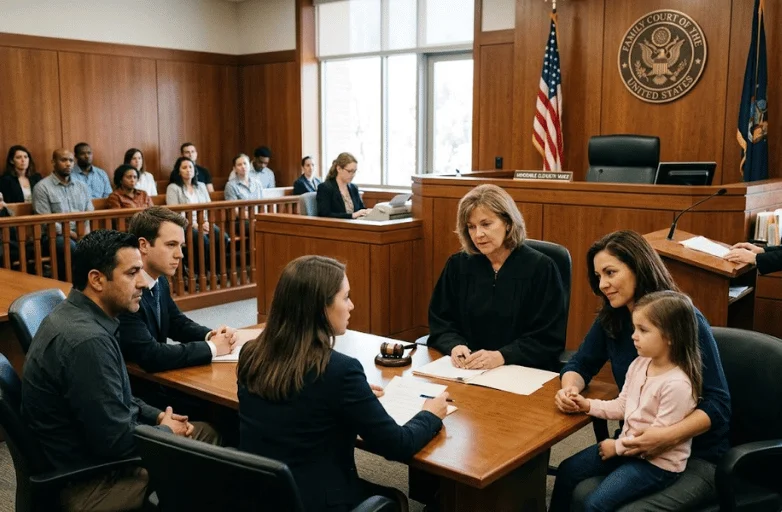
Family court deals with some of the most personal legal disputes a person can face, including questions about children, financial support, separation, and family safety. Unlike the federal court system, most family-law matters in the United States are handled through state courts, and the exact court name, filing procedure, forms, and deadlines depend on where the case is filed. Understanding that structure before submitting paperwork or attending a hearing can make the process much easier to navigate.
No single nationwide procedure applies identically in all 50 states. One state may have a court dedicated to these disputes, while another may assign the same issues to a family division of a district, circuit, superior, or other trial court. This guide therefore explains the common U.S. process while highlighting areas where readers should confirm the rules of their own state or county.
Short answer: Family court is generally a state or local court, or a specialized division of a state trial court, that handles legal disputes involving family relationships. Depending on the jurisdiction, it may handle custody, parenting time, child support, divorce-related matters, parentage, adoption, guardianship, support, and domestic-violence protection.
| Question | General U.S. answer |
|---|---|
| What does the court handle? | Common matters include custody, parenting time, support, divorce-related disputes, parentage, adoption, and protection orders |
| Is it federal or state? | Ordinary family-law cases are primarily handled in state court systems |
| How does a case start? | Usually with filing a petition or complaint and legally notifying the other party |
| Will every case go to trial? | No. Agreements, negotiation, mediation, or other settlement procedures may resolve some or all issues |
| Can a judge make temporary orders? | Often, depending on state law and the type of case |
| Do you need a lawyer? | Not always, but legal advice can be particularly important in complicated, contested, or high-risk cases |
| Are procedures the same nationwide? | No. State statutes, local court rules, forms, deadlines, and court structures differ |
1. Family Court Is Primarily Part of the State Court System
Most marriage, divorce, adoption, custody, and support matters fall within state court systems rather than ordinary federal trial courts. The U.S. Courts’ comparison of federal and state systems specifically identifies family-law matters such as marriages, divorces, and adoptions among the types of cases commonly handled by state courts. A particular state may then create specialized judges, divisions, or courts to manage those disputes.
The label can be misleading if you assume every county has a courthouse with that exact name. Cornell Law School’s Legal Information Institute describes it as a court of limited jurisdiction dealing with family-law matters, while also emphasizing that procedures vary substantially because family law is largely controlled by state and local law. Before filing anything, check the official judiciary website for the state and county connected to your case.
This variation can affect even familiar matters such as divorce. For example, New York has Family Courts throughout the state, but the state’s Supreme Court handles divorce, while those courts can address matters such as custody, visitation, child support, spousal support, and parentage. That example shows why finding the correct local court matters more than the name on the courthouse sign.
2. What Types of Cases Does This Court Handle?
A family-law court or division typically handles disputes involving parents, children, spouses, domestic partners, and other legally recognized family relationships. The exact jurisdiction depends on state law, so no nationwide list applies to every court. Some matters may also overlap with juvenile, probate, criminal, or general civil courts.
Common family-law matters can include the following.
- Child custody and parenting time or visitation.
- Child support.
- Divorce and legal separation.
- Spousal support or alimony.
- Parentage or paternity.
- Adoption.
- Guardianship.
- Domestic violence or protective-order matters.
- Modification of existing custody or support orders.
- Enforcement of existing family-law orders.
- Certain child welfare or juvenile matters, depending on the jurisdiction.
Child-related issues frequently overlap rather than occurring in isolation. A parentage proceeding, for example, may lead to requests involving custody, parenting time, or support, while a divorce involving children may require the court to address both parenting arrangements and financial obligations. Newssnaut’s guide to a child support lawyer explains how support disputes can also intersect with parentage, custody, modifications, enforcement, and interstate issues.
3. A Case Usually Starts With Filing and Notice
A typical case begins when one person files the required petition, complaint, motion, or other document asking the court to take action. The correct document depends on what the person wants the judge to decide, whether a case already exists, and the terminology used by that jurisdiction. Filing the wrong type of case can create unnecessary delays, so check official state-court instructions before submitting documents.
The other party generally must then receive legally sufficient notice of the case through the procedure required by local law. This process is commonly called service, although the permitted method and deadlines vary by jurisdiction and type of proceeding. Simply telling another person that a case was filed does not necessarily satisfy formal service requirements.
After receiving the papers, the responding party may have a limited period to file an answer, response, objection, or other required document. Missing that deadline can affect the person’s ability to present a position or may allow the case to continue without a timely response. Anyone who receives court papers should read the documents immediately and confirm the applicable response date with the court, a self-help service, or a qualified local attorney.
4. Temporary Orders Can Govern the Family While the Case Is Pending
A family-law case can take a long time to finish, but parents and spouses may need rules long before it ends. Courts in many jurisdictions can issue temporary orders addressing matters such as where a child stays, parenting schedules, child support, spousal support, possession of a home, or other immediate concerns. Whether a particular temporary order is available depends on state law and the type of proceeding.
Temporary orders matter because they can set the arrangements the parties must follow while the larger dispute continues. They are not necessarily the same as the final decision, and a temporary ruling does not automatically predict what a judge will decide after fuller evidence or a final settlement. Nolo notes that courts commonly use such temporary orders to address urgent custody, support, and property-related needs while a divorce is still pending.
If an immediate safety concern is involved, ordinary scheduling may not be the only option. Courts may have separate procedures for emergency or protective relief, especially where domestic violence or threats are alleged. Because the requirements can be highly state-specific, someone facing immediate danger should use local court and advocacy resources rather than assuming the ordinary family-law timetable applies.
5. Child Custody and Support Decisions Follow State-Specific Rules
Custody disputes generally address two related questions: who has authority to make important decisions for a child and how the child’s time or residence will be arranged. Terms such as legal custody, physical custody, parenting time, visitation, joint custody, and sole custody are commonly used, but definitions and statutory factors vary by state. Courts generally focus on the child’s welfare or best interests under the standards required by the controlling state law.
Judges may consider evidence about the child’s needs, parental responsibilities, existing caregiving arrangements, safety, stability, and other factors authorized by state law. Domestic violence can be especially important because states may impose specific restrictions, presumptions, findings, or safety requirements when abuse has occurred. California’s court self-help materials, for example, explain that special state laws apply to custody decisions involving domestic violence, illustrating how local statutes can materially change the analysis.
Child support is also governed primarily through state rules and guidelines, even though federal and interstate systems support enforcement and administration. A support case may involve income information, parentage, existing custody arrangements, prior payments, medical support, or requests to modify an earlier order. The child support guide linked earlier in this article covers modifications, enforcement, and attorney involvement in more depth.
6. Mediation or Settlement May Resolve Issues Without a Full Trial
Going to court does not necessarily mean every disagreement will be decided after a contested trial. Parents or spouses may reach agreements through direct negotiation, lawyer-assisted negotiation, mediation, settlement conferences, or another dispute-resolution process the court permits. Some jurisdictions also require certain parties to attempt mediation before a judge decides particular parenting disputes.
Mediation generally aims to help the parties reach workable terms rather than requiring a judge to decide every detail. If the parties reach an acceptable agreement, they may still need to submit it to the court for approval before it becomes an enforceable court order. If the parties cannot agree, unresolved issues can continue to a hearing or trial.
Mediation is not equally appropriate for every family. Where domestic violence, intimidation, coercive control, or serious safety concerns exist, additional protections or different procedures may be necessary. If you have safety concerns, tell the court, mediator, attorney, or qualified advocate so they can evaluate the procedures available in that jurisdiction.
7. What Happens at a Hearing?
A hearing gives the judge an opportunity to consider a specific request, dispute, or stage of the case. Depending on the issue, the parties may present documents, financial information, testimony, arguments, witness evidence, or other material permitted under local procedural and evidence rules. Some hearings are brief and focused on temporary matters, while a contested final hearing or trial may involve substantially more evidence.
Preparation should begin with the court notice because it identifies the date, location or remote-access instructions, and often the purpose of the proceeding. Review everything previously filed, organize relevant documents in a logical order, and know exactly what you are asking the judge to decide. Follow local instructions concerning exhibits, witnesses, filing deadlines, electronic submissions, courtroom conduct, and copies for other parties.
Court proceedings are formal even when you do not have an attorney. Speak to the judge rather than arguing directly with the other party, answer questions clearly, and distinguish facts you can support from assumptions or accusations. Avoid bringing irrelevant messages, photographs, or records simply because they are emotionally important, since the court will focus on the legal issues before it.
8. A Final Order Can Be Enforced, Appealed, or Sometimes Modified
When the court resolves the case or approves an agreement, the judge can issue written orders describing what each party must or may do. Depending on the proceeding, those orders may cover custody, parenting schedules, support, property-related obligations, protection requirements, or other matters within the court’s authority. Read every final order carefully because the written language, rather than someone’s informal understanding of the hearing, controls the legal obligations.
A person who believes an order is legally incorrect may have appeal or reconsideration options, but deadlines can be short, and procedures differ by state. An appeal is not simply another chance to present the entire dispute again, and appellate courts review issues under specific legal standards. Anyone considering an appeal should check the deadline immediately rather than waiting to see how the order works in practice.
Some family-law orders can be modified later when the legal requirements for a change are met. Custody and child support orders, for example, may be subject to modification procedures after significant changes in circumstances, but the applicable standard varies by jurisdiction and order type. Parties should not assume that a verbal agreement automatically replaces an existing written court order.
9. You Can Use Self-Help Services, Legal Aid, or a Family-Law Attorney
Not everyone in these cases hires private counsel. Many state and county courts operate self-help centers that provide forms, filing instructions, procedural information, and referrals, although staff generally cannot act as your personal attorney or provide the same individualized legal advice as retained counsel. Services differ considerably from one courthouse to another.
Legal aid may also be available to people who meet program requirements. The Legal Services Corporation funds independent civil legal-aid organizations throughout the United States and directs people seeking help to local programs and LawHelp.org resources. Many legal-aid organizations handle family-law matters, including domestic violence, custody, and support.
Private representation becomes particularly worth considering when the case involves disputed custody, serious safety concerns, complex finances, contested parentage, interstate jurisdiction, allegations of abuse, enforcement sanctions, or an important evidentiary hearing. A lawyer licensed where the case is pending can explain the local statutes, deadlines, courtroom practices, and strategic options that a general national guide cannot cover. Readers can also explore Newssnaut’s broader Law section for related legal guides.
What Documents Should You Prepare?
The right documents depend on what the judge must decide. A custody hearing requires different evidence than a support modification, and a protection-order proceeding may require different evidence again. Start with the court’s instructions rather than submitting every record connected with the relationship.
Relevant documents may include the following.
- The petition, response, motions, and other filed papers.
- Existing court orders.
- The notice showing the hearing date and purpose.
- Proof of service when required.
- Income records and financial disclosures for support issues.
- A proposed parenting schedule for custody disputes.
- Payment histories for support enforcement matters.
- Relevant written communications.
- School, medical, childcare, or expense records when legally relevant.
- Documents or exhibits specifically required by the court.
Organize materials by issue and date so you can find them quickly. Keep copies and follow local requirements concerning exhibits, confidential information, redaction, and advance filing or exchange with the other party. Never assume that possessing a document automatically means the judge will admit or consider it as evidence.
What If Domestic Violence or Safety Is Involved?
Family-law disputes involving violence, stalking, threats, or coercive behavior require additional attention to safety. Depending on state law, a court may issue protection orders and make temporary decisions about contact, children, housing, or related matters. Protective-order and custody procedures vary, so check the local court’s domestic-violence resources promptly.
The National Domestic Violence Hotline provides confidential support and information about legal resources, protective orders, advocacy organizations, and safety planning. It also advises people facing a life-threatening emergency to contact 911 when doing so is safe. Court action can be only one part of a broader safety plan.
Do not rely on general internet information to decide whether a dangerous situation qualifies for emergency relief in your jurisdiction. A local domestic-violence advocate, legal-aid organization, or licensed attorney can help identify the procedures and protections available where you live. If children are involved, address any safety concern through the appropriate lawful process rather than informally changing an existing court order without understanding the consequences.
Frequently Asked Questions About Family Court
Is Family Court the Same as Divorce Court?
Not always. In some states, a court or division commonly described as a family division handles divorce cases, while other states assign divorce jurisdiction differently. New York, for example, handles divorce in Supreme Court even though its Family Court addresses several related family-law matters.
Do These Cases Always Involve Children?
No. Family-law proceedings can include disputes between spouses or partners that do not involve children, depending on the jurisdiction. Courts may address matters such as spousal support, separation, protection orders, or other legally recognized family issues.
Do I Have to Hire a Family-Law Attorney?
Not necessarily. Self-representation is permitted in many civil family-law matters, and court self-help services or legal-aid organizations may help eligible people. A lawyer becomes more valuable when the legal or factual issues are contested, complicated, interstate, financially significant, or connected with safety concerns.
How Long Does a Case Take?
There is no reliable nationwide timeline. A straightforward uncontested matter can move differently from a case requiring service disputes, financial discovery, evaluations, multiple motions, mediation, witnesses, or a contested trial. Local court schedules can also substantially affect how long a case remains open.
Are Hearings Open to the Public?
Access rules differ by state, court, and type of proceeding. Some family-related records or hearings receive greater privacy protections, particularly where children or sensitive matters are involved, while other proceedings may have different public-access rules. Check the court handling your particular case rather than assuming all family proceedings are either public or confidential.
Can Parents Make Their Own Custody Agreement?
Parents can often negotiate a proposed parenting arrangement, but an enforceable custody order usually requires submitting the agreement and having the court accept it through the applicable process. The judge may need to determine that the arrangement satisfies the legal standard governing the child’s interests. Until an agreement becomes an enforceable order, its legal effect can differ from that of a signed court order.
Can a Court Order Be Changed Later?
Some orders can be modified when state-law requirements are met. Custody and support are common examples, but the required showing, evidence, filing process, and effective date vary by jurisdiction. Do not stop following an existing order merely because circumstances have changed or because the parties have reached an informal understanding.
The Bottom Line
Family court is not one nationwide court system with one set of rules. It is primarily part of state judicial systems, and the exact court, case types, forms, deadlines, custody standards, support procedures, and hearing requirements depend on local law. The most useful first step is identifying the official court with authority over your particular family-law issue.
Once you know the correct court, read its self-help instructions, gather the relevant documents, and determine whether your dispute can be handled through agreement, mediation, agency assistance, or a court hearing. For complicated custody, support, safety, jurisdiction, or enforcement issues, consider getting advice from a family-law attorney licensed in the state handling the case. General information can help you understand the process, but it cannot replace advice based on your specific facts and local law.
